

Industrial Data Acquisition & Monitoring

Connect compatible machines, meters, sensors and equipment to software that collects, stores and presents operational data. We IT People helps businesses turn available machine data into useful operational information.
Discuss Your Industrial Data ProjectTurn machine data into useful insight
Many machines and industrial devices expose information through communication interfaces, meters, sensors or other data outputs. However, that information may remain isolated from the systems used by operations and management teams.
Manual readings, limited historical data, separate monitoring systems and delayed notifications can make operational trends difficult to identify. A suitable data acquisition solution can help make available equipment data easier to access and review.
We assess available data points, collection frequency, storage, dashboards, alerts and integration requirements. The practical scope depends on equipment compatibility, interfaces, documentation and the operating environment.
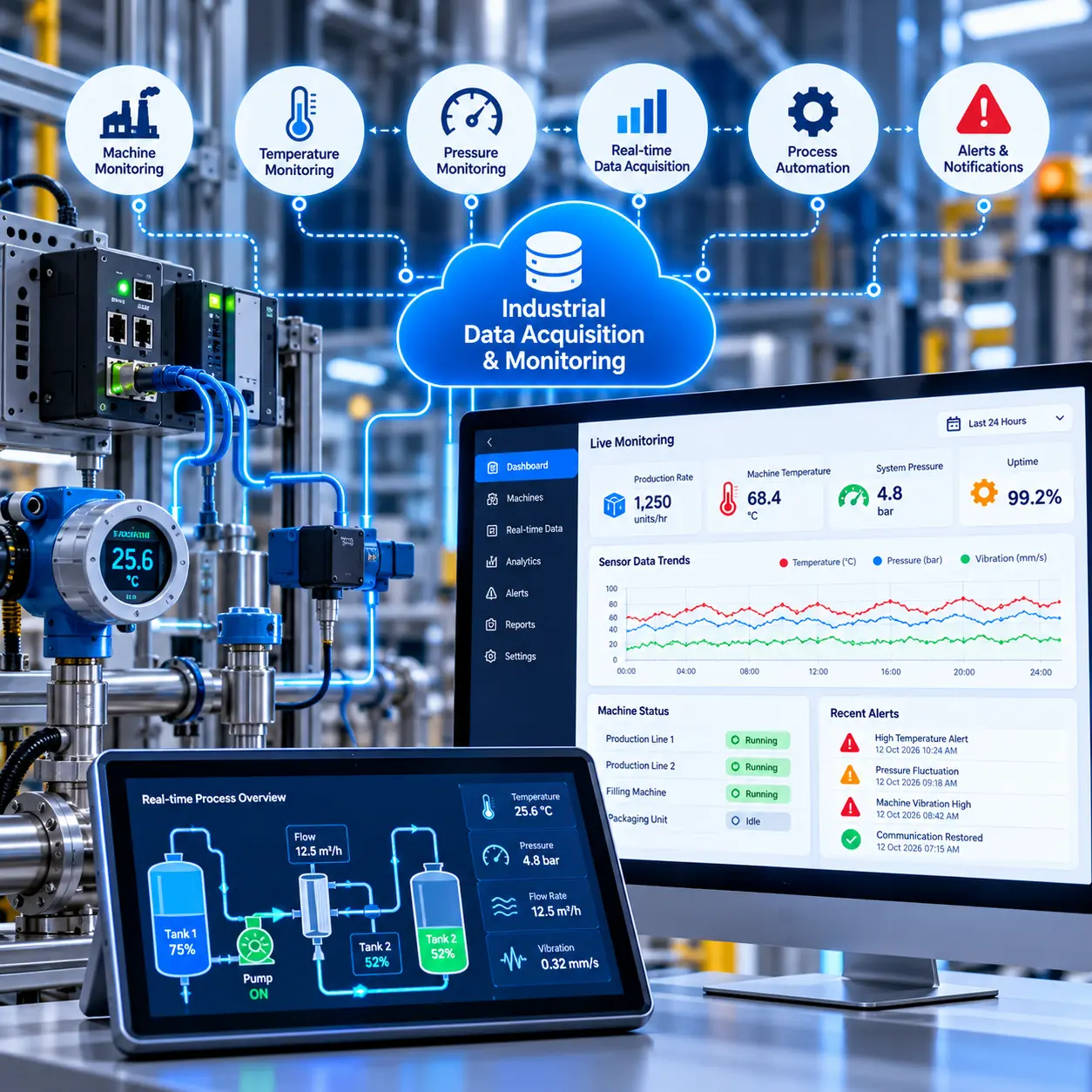
Your Equipment May Already Produce Valuable Data
Manual readings, disconnected monitoring tools and limited historical records can make it harder to spot trends and share information across teams.
Manual Data Collection
Reduce repetitive recording and reconciliation where compatible equipment data can be collected automatically.
Limited Historical Visibility
Organize readings over time to support comparisons, trend reviews and operational reports.
Delayed Notifications
Define alerts for selected readings or conditions when data access and the operating environment support them.
Industrial Data Acquisition & Monitoring
Explore ways to collect equipment data, monitor operating conditions, connect systems and make operational information easier to review.
Industrial Data Collection
Collect selected readings and status information from supported equipment, instruments and sensors.
- Equipment and process measurements
- Sensor, meter and controller data
- Structured data fields and validation rules
Equipment and Sensor Connectivity
Assess and connect compatible devices through supported interfaces, gateways and protocols such as RS-232, RS-485, Modbus or BACnet where applicable.
- Sensor readings and equipment status
- RS-232 / RS-485 and supported protocols
- Modbus, BACnet or other suitable interfaces
- Signal mapping and data normalization
Real-Time Monitoring Dashboards
Present selected readings, trends and status indicators in a centralized view to support operational awareness.
- Live or scheduled data updates
- Status indicators and trend views
- Equipment-to-data association
Alerts and Threshold Monitoring
Where supported, configure monitoring rules for selected values or conditions that may need attention.
- Defined thresholds and conditions
- Notifications for selected events
- Alert testing and device compatibility
Data Logging & Reporting
Organize acquired data for historical review, trend analysis, operational reporting and reconciliation.
- Historical readings and event records
- Trend and comparison reports
- Reporting and retention requirements
System Integration & Data Exchange
Connect acquired data with suitable databases, APIs, dashboards and existing business or operational applications.
- Business application and database connections
- Sensors, PLCs, gateways and supported device interfaces
- Integration, data quality and workflow testing
An industrial data partner focused on operational visibility
We help shape a practical monitoring approach around your equipment, data sources, connectivity and operational requirements.
Discuss Your Industrial Data ProjectClear Communication
Clear explanations of data sources, connectivity needs and integration options.
Operations-Focused Planning
The solution is planned around the measurements and operating conditions your team needs to see.
Data Validation & Testing
Testing helps identify issues with data quality, device communication and system handoffs.
Connected Operational Systems
Monitoring workflows can make relevant equipment data available to the systems and teams that need it.
Data Monitoring for Your Operations
Industrial data monitoring can support production equipment, utility meters, process parameters, historical analysis and operational notifications, depending on equipment and connectivity.
Production Equipment
Utility Meter Monitoring
Process Parameters
Historical Analysis
Operational Alerts
Data Reporting
A Practical Data Flow
A conceptual workflow can connect available equipment readings with storage, visualization and reporting.
Machine / Meter / Sensor
Available readings and device signals
Data Collection
Supported interface, gateway or protocol
Data Storage
Structured or time-series records
Dashboard / Alerts / Reports
Visualize readings and configured conditions
This is a conceptual illustration, not a representation of a specific installed system. Equipment compatibility and available data must be assessed for each project.
From Equipment Assessment to Actionable Data
Assess the
Equipment
Identify equipment, available data points, interfaces and communication requirements.
Define Data
Requirements
Choose useful readings, collection frequency and interpretation rules.
Design the
Architecture
Plan collection, storage, dashboards and integration requirements.
Implement
& Test
Verify data accuracy, reliability and device communication.
Configure Views
& Alerts
Create dashboards, historical views, reports and defined alerts.
Integrate Where
Required
Connect other systems when interfaces and permissions are available.
Every Machine Is Different
Available information varies by manufacturer, model, configuration and installed interface. Before recommending a solution, we confirm:
- What data the equipment exposes.
- Which communication interfaces and protocols are available.
- Whether documentation and access are available.
- How frequently data needs to be collected.
- Whether the requirement is monitoring only or includes control functions.
This assessment helps establish a practical scope before implementation.
Make Better Use of Equipment Data
Depending on the project, data acquisition can help your organization:
- Reduce manual data collection.
- Improve visibility into equipment readings.
- Maintain historical operational records.
- Identify trends and configured abnormal conditions.
- Improve reporting and system integration.
- Make data easier for authorized personnel to access.
Actual benefits depend on the existing process, implementation and operating environment.
Industrial Data Acquisition & Monitoring FAQs
Industrial data acquisition and monitoring involves collecting information from equipment, sensors, instruments or control systems and presenting it in a useful form for monitoring, analysis and reporting.
Possible connections depend on the equipment and available interfaces. A project may involve supported sensors, meters, PLCs, industrial devices, databases, APIs or existing operational software.
Where the required data can be accessed, a solution can bring selected readings and status information into a central dashboard for monitoring, trends and reporting.
We can assess available interfaces and data formats to determine whether equipment data can be connected with existing databases, business applications, dashboards or reporting tools.
Depending on data availability and project requirements, monitoring workflows may include threshold-based alerts or notifications for selected conditions. Alert logic should be defined and tested for the operating environment.
Compatibility depends on device protocols, connectivity, data formats, security restrictions and the equipment manufacturer. We review these factors before confirming the proposed approach.
Where data storage and access are included in the project, historical readings can support trend views, reports and operational comparisons. Retention and reporting requirements should be agreed in advance.
We begin by understanding the equipment, signals, required measurements, reporting needs and available interfaces. This helps define a practical scope and identify any technical dependencies.
Have equipment data you want to capture or monitor?
Tell us about your machines, meters, sensors and available communication interfaces. We can help assess feasibility and define a practical way to turn available data into useful operational information.
Discuss Your Industrial Data Project